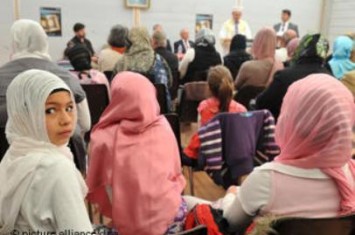
Young, British-born white. Women. And .... decided to become Muslim. This phenomenon is now being implicated in the UK. The converts were mostly educated young people.
Joanne Bailey
Young, British-born white. Women. And .... decided to become Muslim. This phenomenon is now being implicated in the UK. The converts were mostly educated young people.
Interest in Islamic Studies at the German University Rises
source
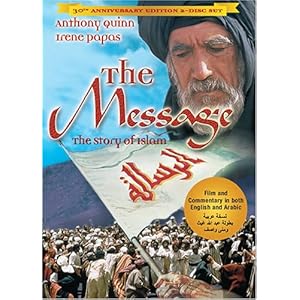
The Message (30th Anniversary Edition) (1976)
Also included in the two-disc set is the Arabic-language version of the film, which was shot at the same time with different actors. (It comes without English subtitles.) It runs about 20 minutes longer than the English version; Akkad explains, in a helpful 44-minute making-of documentary, that Arab styles of storytelling (including pacing) and acting are quite different than in the West. Akkad would also make Lion of the Desert and executive-produce the Halloween pictures. He died in the November 2005 terrorist bombings in Jordan. --Robert Horton
Label: Education, family, info, stories of islamic figures
When Hand Written Calligraphy No More
The answer is the computer.
You've never known kelk 2007 program? With this program, calligraphy can be made very well. Although not selentur hand calligraphy works, kelk program has the ability to create beautiful letters. Unlike written arabic fonts through the Arab-based computers that are still stiff, Kelk programs have flexibility in preparing the letter.
Take a look at the writings of Al-Fatihah letter below. Beautiful is not it?
FATIHAH-kelk
Kelk program is designed to write calligraphy. Though less so perfect in the writing of calligraphy overlapping types tsuluts, Kelk has the advantage in writing or hot type ta'liq typical ta'liq Iran.
See also the example below:


On the Internet, a lot of illegal software in circulation is the previous version, namely Kelk 2000. Unfortunately this program can only be installed on Windows XP-based Arabic. I've installed on Windows XP, can not write letters for the English-based keyboard. May need to install the Arabic language?
You never used this program?
Label: info, Islamic calligraphy painting
Japanese artists with Arabic Calligraphy Specialties

Interest to Kouichi Honda arabic calligraphy began about 30 years ago when he worked in Saudi Arabia as a translator. Now, in addition to its popularity in Japan is increasing, Honda is also known as a calligrapher international arab. Calligraphy works exhibited regularly in Japan and has a rapidly growing student.
Honda's work is often applied in a bright background is not like the classic Japanese calligraphy written on a plain background or a pastel.
Honda studied Arabic in college, until the late 1960s when he took a job in Saudi Arabia as a translator for a Japanese company that makes a map for the Ministry of Petroleum and Mineral Resources Kingdom of Japan. When he returned to Japan, he continued to practice what he had learned from the calligrapher who accompany the map-making expedition, in charge of writing the names of the sand hills and dry rivers in the map.
Label: info, Islamic calligraphy painting, news
VaLenTiNe Day and IsLaM

"Jews and Christians would not like to you until you follow their religion. Say: 'The guidance of Allah That guidance (right) ". and indeed if thou follow their desires after the knowledge came to you, then God is no longer the protector and helper for you ". (Surat al-Baqarah [2]: 120)".
Islam is a complete religion, which is not merely a religion. More than that, Islam is a value system and life systems. For some people, Islam is a liberator, Islam is the savior. However, for most people who have secure and established a system that has dianutnya, Islam is a threat. It's not unusual when so much antipathy toward Islam. Since Islam was born was already so. Various methods are used to devastated. Through openly or secretly.
The most effective efforts and do not need to spend a lot of energy to destroy one of Islam is to obscure the teachings of Islam. Samuel Zwemer in al Quds conference for priests in 1935 saying: "Actually, your task is not out Muslims from their religion to your religion. However, keep them away from his religion (the Qur'an and Sunnah) ". One of those moments that are often used to distance Muslims from their religion is a valentine's day.
One morning Desy surprising his friends with a red flower that he put on his chest, they were immediately greeted with a smile and asked, "In the context of what this is?" Desy said, "Do not you know that this is a day of love in which people were celebrating and congratulating each other. This is a celebration to express my love, romance and all sincerity, this is Valentine's Day ...". But Sari, one of his friends asked Desy in amazement, "What is the meaning of Valentine's Day?" Desy said, "It means love in Latin ..!" Sari laughed at the answer, "Are you celebrating something you do not understand its meaning? Did you know that Valentine was a priest who lived in Christianity to 3rd century AD?" Sari said pitched concerned about the state of some Muslim women are easy to follow what comes to them without thinking.
VALENTINE'S DAY HISTORY
Sari went on: "The Catholic Encyclopedia mentions three versions of the Valentine, but the popular version is the story of Reverend St.Valentine who lived in the late 3rd century AD at the time of the Roman King Claudius II. On February 14, 270 AD Claudius II St.Valentine execute the have opposed some of his orders. " "Claudius II saw St.Valentine religion invites man to Christianity and he was ordered to arrest him. In the second version, Claudius II, the boys looked more resilient in the war than those who have been married since the beginning refused to go to war. So he issued an order prohibiting the marriage. But this command St.Valentine opposed and continue to hold church wedding in secret until the last note was imprisoned. In prison he became acquainted with the daughter of a prison guard who became ill. She treated him so well and fell in love with him. Before sentenced to death , he sent a card that read "From a sincere love, Valentine's Day." This happened after the child is converted to Christianity along with 46 relatives. "
Continue Sari: "A third version mentions the religion Christianity spread in Europe, in one village there is a Roman tradition that attracted the attention of pastors. In the tradition of the village youth were always together every mid-February. They write the names of villages and laid her in a box, and every young man take one name from the box, and the girl whose name would become his lover out of the year. He also sent a card saying "the name of god mother, I am sending you this card."
Sari continued: "Due to the difficulty of eliminating this Roman tradition, the priests decided to replace the phrase" with the name of god mother "with the phrase" with the name of Reverend Valentine "that can bind to these young men with religious Christians."
"Another version says St.Valentine asked about Atharid, god of trade, fluency, treason and theft, and Jupiter, the Roman god of the greatest people. So he answered the gods are man-made and that the real god is Isa Al Masih," explained Sari, "the Most High God of what is said by people who are dzalim."
"Even now circulating the cards this religious festival with a child drawing with two wings to fly around a heart with arrows directed towards actual heart is a symbol of the god of love for the Romans!" So Sari end advice.
LAW celebrate VALENTINE
ABG currently most affected by the disease Muslim bandwagon and follow suit in the Western or Christian culture under the influence of television and other mass media. Included also in this celebration of Valentine's Day, which is basically relived St.Valentine pastor. The desire to join in. There is within man, but it would be reprehensible in Islam when those who followed us different from the beliefs and thoughts.
Especially if followed in the case of creed, worship, syi'ar and habits. And the Apostle has forbidden to follow the procedures of worship other than Islam: "He who imitate a nation, so he included from the them." (Narrated by al-Tirmidhi). If the intention to celebrate Valentine's think back then no doubt that he was an infidel, as for if he did not mean that he has done a great kemungkaran. Ibn al-Qayyim said, "Giving congratulations on pagan rituals that special person for them, it was agreed that such unlawful acts. For instance congratulated on holidays and their fasting, by saying," Happy holidays! "And similar. For those who say, if they do not come to infidelity, at least it is an unlawful act. That he has been congratulated for their actions who worship the cross. Even the act is greater sin in Allah's wrath and more than congratulated for what to drink alcohol or killed. Many people who do not understand the religion got into the act without being aware of the bad deeds.
Like people who congratulate others for their immoral actions, heresy or infidelity he had prepared himself to get the anger and wrath of God. "Waqid Abu radhiyallah 'anhu narrated: The Messenger of Allaah' alaihi wa sallam when out to the war of Khaibar, he through a tree of idolaters, who called Dzaatu Anwaath, usually they hung their weapons on the tree. The Messenger of Allaah friends' alaihi wa sallam said, "O Allah, make us Dzaatu Anwaath, as they have Dzaatu Anwaath. "So the Messenger of Allah n says," Glory to God, this is pronounced like the Prophet Moses, 'Make us a god as they have gods. " By the Essence of my soul in His hands, so you will follow those customs that existed before you. "(Narrated by al-Tirmidhi, he says, hasan saheeh).
Is mandatory for every person who uttered two sentences the testament to implement wala 'and bara' (loyalty to Muslims and innocent of pagan groups) which is a basic belief held by the righteous salaf. Namely loving believers and hated infidels, enemies and their menyelisihi. And know that this attitude where there is an infinite benefit, otherwise resembling the lifestyle of people disbelieve it contains more damage.
Other than that, mengekornya Muslims to their lifestyle will make them happy, after all, resemble the infidels can generate love and heart attachment. Allaah has said, which means: "O ye who believe, do not you take the Jewish people and Christians become the leaders (of all); some of them are leaders to each other. Whoever among you take them into leaders, the real person they belonged to. Verily Allah does not guide the people who do wrong. " (Al-Maidah: 51)
"You will not find a nation who believe in Allah and the Last Day, berkasih mutual affection with those who oppose Allah and His Messenger." (Al-Mujadilah: 22)
"And let not pity for the adulterer is preventing you to (run) the religion of Allah, if ye believe in Allah, and the day akherat." (An-Nur: 2)
Among the adverse effects like they are; participate popularize their rituals so terhapuslah Sunnah. There is no innovation, no matter when it is turned on unless there is a Sunnah of the deceased. Other adverse events, that by following them means extending the number of them, support and follow their religion, but a Muslim prayer in every raka'at read, "Show us the straight path, (ie) the way of the people whom thou hast bestowed favors to them ; not the (path) of their wrath and not (all the way) they are astray. " (Al-Fatiha :6-7)
How could he begged God to show him the way the people in faith and kept away from their class path error and wrath, but instead he wandered off the path voluntarily.
There was a girl says, that he did not follow their beliefs, it's just Valentine's Day is specifically gives the meaning of love and love citanya to people who commemorate. This is an omission, but once again this is a celebration of other religious rituals! Prizes are awarded as an expression of love is a good thing, but when linked with the Christian parties and the Western traditions, will result obsessed by culture and their lifestyle. Party on that day is not something trivial, but rather reflect the adoption of Western values are not normative view of social boundaries between men and women that we see their social structure in ruins.
Alhamdulillah, we have the replacement is much better than it all, so we do not need to imitate and resemble them. Among other things, that in our view, a mother has a great position, we can offer it to him from time to time, as well as for father, brother, husband. Etc., but that we do not specifically at the celebration by the people infidels.
May God always makes our lives filled with love and sincere affection, which became the bridge to enter the area hamparannya Heaven Heaven and earth are reserved for those who fear Allah. May Allah make us one of the classic that people mentioned: "My love is for those who love each other because I, who visited each other because I and a mutual sacrifice because I am." (Al-Hadith).
FATWA ULAMA
Question: In these days it has spread and entrenched celebration of Valentine's Day, especially among women students, and he is one of several kinds of Christians holidays. Usually the outfit complete with red shoes, and they exchange red roses. How law celebrate this Valentine's Day, and what are your suggestions and recommendations to the Muslims. May God always keep and protect you.
Answer: Assalamu 'alaikum wr. wb.Merayakan Valentine's Day should not be, because: First: it is an innovated holiday that no legal basis in Islamic law. Second: it can cause liver busy with petty things like this case is very contrary to the instructions of the salaf salih (our predecessor) - may Allah meridhai them. It is not lawful to do the ritual feast, either in the form of eating, drinking, clothing, gift or exchange of another. Every Muslim should feel proud of their religion, not a person who does not have a handle and part of it.
May Allah protect the Muslims from all fitnah (test of life), which was or is hidden and may include us all with the guidance of His
Who The Best calligrapher ?
Maybe you're like me, never ask this: Who is the best calligrapher in existence? Was Muhammad Hashim al-Baghdadi? Or Hamid al-Amidi? Or ...?
In the world of calligraphy, two names I mentioned above is a name that no doubt his genius in this art field.
Comparing the calligrapher, maybe not a fair one. But as a student of calligraphy that had just struggled in this field, we often can not wait to mengapai stages higher than we knew before. Sometimes in the studio or a place to learn calligraphy, we often compare what the best teachers in the calligraphy teachers.
I've had a few teachers of calligraphy. There Farhan Ustad, Ustad Hanafi, and Ustad Sunarto. Each other has a unique character. Ustad Farhan, although a bit "stiff" in writing, he is one of my best teachers. Ustad Hanafi which makes me in awe, to teach calligraphy only briefly. While the latter, though have never taught in the lesson kaligarfi, his writings when teaching dictation ', (dekte) is stunning.
"Learning from the best calligrapher, certainly a better result." I, frankly, including a notion like this. The impact, I am reluctant to learn on-calligrapher calligrapher who do not have a "reputation" is clear-that generally is from the country has published many books on calligraphy.
As the field of science that looks (scratch the letter and technical writing) of all calligrapher can we compare. Writing techniques from books, generally taught how to carve the letter. Starting from the letter simplex (an independent) to the letter, located in the middle and rear. [Generally calligraphy handbook adopted this way.]
Simplex in the letter alif naskhi example, although the science of calligraphy was measured by high five points, with a slope to the left as wide as half a point, in fact in practice, the calligrapher is not the same one to another. Proportions generally too large to be the dominating nature of domestic calligrapher. [Or maybe an example that we learned from the book is always a small letter?]
As an art, certainly the quality of one another can be different. Scratch each other "not perfect". In fact, from our own hands have learned mengores dozens of times, out of different strokes. [Of course understood, we are not a calligrapher?]
Back to the title above: Who is the best calligrapher?
I have trouble answering.
But I have experience: the best is kaligarfer calligrapher who makes you wonder, no matter whether his work is really the number one in the world.
From the awe that comes a sense of want to learn more. That's where the future of teacher you admire it sajajar with you. Continue to learn and practice regularly. That way your hands will find their own way ...
How do you think?
Label: info, Islamic calligraphy painting
Great Mosque in Samarra, Iraq
the oldest mosques in the city of Colombo
Assyafaah Mosque, Singapore

Ireland Dublin Mosque
Islamic Arts Museum - An Insightful Tour Through Islam Via Its Culture and Heritage in Asia
The Islamic Arts Museum in Kuala Lumpur Malaysia is the largest in South Asia. It houses some of the most unique Islamic related artefacts from around Asia in a modern spacious environment with unique awareness programs.The Islamic Arts Museum was opened in December of 1998 and specializes in showcasing art and literature influence by Islam. The museum is divided into five key areas: The galleries in the museum are divided into 12 areas encompassing a wide variety of topics. Some of the popular permanent exhibits revolve around architecture: considered one of the earliest examples of Islamic cultural expression the museum houses a wide variety of intricately replicated scale models of famous Islamic structures and attraction including one of the largest models of the holy Masjid Al Haram. Qur'an. Manuscripts, the written word was held in high regard in the ancient Islamic world where scribes were highly sought, even Islamic science and philosophy though not glorified like Islamic scripts were highly revered for their substance and significant contribution to the world of science.
A little known fact was the Chinese influence on Islamic arts and culture, mainly in the form of calligraphy, which was popular in Islamic culture. Museum houses a variety of ancient cloisonné which have been decorated in painstaking detail and exude an Islamic feel with an oriental touch. Jewellery in the Islam world was very popular and highly coveted, the Islamic Art Museum focuses on Asian variations of Islamic Jewellery that are meaningful and elegant using agates, carnelians and red glass to enrich their designs.
Known for their beauty and their strength Islamic weaponry was both beautifully ordained with precious stones and detailed designs as well as devastative power on the battle field. The museum houses a wide collection of arms and armour from the Persian Gulf and other Islamic states highlighting Islamic cultural influence in warfare.
Islamic education is a vital component of helping to keep Islam and its vibrant history and culture alive. The museum holds a variety of programs and sessions for both the young and old to help improve awareness on this unique and ancient religion and culture.
Guests after a long day of exploring the museum and its wonders may relax and the restaurant amidst its Islamic style and calm fountain and enjoy a wide variety of Middle Eastern delicacies.
Label: info
Islamic Art - The Legendary Phenomenon of Rich Creativity
Early Islamic Art originated in the seventh century from the region, now known as Syria. Islamic Art encompassed the works of all artists, irrespective of their religion, living on the lands under Muslim Empire. As a result, Islamic Art is a confluence of various art cultures. Islamic Art had architecture, calligraphy, painting, and ceramics, as its key forms.
In the Early Islamic Period, from seventh to tenth century, the most prominent art form was calligraphy. This involves decorating text, including the use of ornamental motifs and embellishments to enhance the appeal of walls and curios in palaces, mosques, and homes. Islamic Calligraphy uses proverbs and verses from the Holy Quran, and is therefore, one of the noblest art forms. It mainly employs two symbolic scripts, 'Kufic' and 'Naskh.'
'Glazed Ceramics' (eighth to eighteenth century), such as "Stonepaste Ceramics of Iraq" (ninth century) were the other splendors of the Islamic pottery. 'Lusterware Pottery,' originally from Iraq of the eighth century, and 'Enameled Glass' were a couple of more prominent eighth and ninth century pottery art forms, of which 'tin-opacified glazing' like "blue-painted opaque glaze wares of Basra" (eighth century), and 'lusterware' were the two 'revolutionary' techniques discovered. In addition, the first industrial complex for 'gilded' & 'enameled glass' production was established in eighth century only, in Syria.
A feature unique to all Islamic Art forms was covering the creative medium surfaces with complex geometric, vegetal, and intricate floral patterns. The recurrence of these patterns, called 'Arabesque' probably hints at the infinite nature of Allah. Luxury artworks, such as beautiful relief-cut, stained, & mosaic glass, intricate tile work, fine ivory caskets, and metalwork peaked in the Medieval Islamic Era (from tenth to fifteenth century).
Islamic Architecture is probably the most important and the most prolific form of Islamic Art. The "Dome of the Rock (Qubbat al-Sakhrah)," in Jerusalem, built in the 691 CE, is perhaps the oldest Muslim building intact in its original form. The use of domes in their buildings has been an integral feature of Islamic Architecture, which was carried through to the nineteenth century western architecture. "The Great Mosque of Cordoba," in Spain and "Alhambra Palace," in Granada, exhibit 'Roman-Byzantine' influences. "The Citadel in Cairo," Egypt, "Turkish Bath Houses (Hamams)," "Caravan Inns (Caravanserai)" of Central Asia, and "Tombs" throughout the Middle East, are the key examples of Medieval Islamic Architecture. Intricate tile works and geometric tiling were the prominent architectural features of this period. The "Taj Mahal," in India, built in the seventeenth century by the Mughal Emperor Shahjahan, is the most brilliant example of the Modern Islamic Architecture.
New art forms, such as jewelry making, stone carving, painting, textile weaving, and manuscript illumination, gained importance during the Later Islamic Period. Some of the finest Islamic Pile Carpets, especially 'Oriental Rugs' and 'Persian Carpets' were created during the sixteenth and seventeenth centuries. Miniature paintings of people, strictly secular in nature, were found in the courts of "Iran" and "Mughal India." Figurative imagery is not very popular in Islamic Art, as idol worship is banned under the 'Sharia Law' of Islam.
Islamic Literature includes the rich works, such as "The Book of One Thousand and One Nights (Arabian Nights)" (tenth to fourteenth century), a compilation of tales by Persian Queen Scheherazade; "Ferdowsi's Shahnameh," an Iranian Epic based on Persian History, and "Amir Arsalan," Persian mythological story. "Layla and Majnun" (seventh century), Arabic & Persian Poetry, is the probable influence for the creation of 'Romeo & Juliet' later. Ibn Tufail's (Abubacer) "Hayy ibn Yaqdhan (Philosophus Autodidactus)," which inspired Daniel Defoe to write 'Robinson Crusoe' and Rudyard Kipling to write 'The Jungle Book,' introduced the concept of philosophical novels to the world, while Ibn al-Nafis' "Theologus Autodidactus" is the first science fiction novel. Islamic Eschatology, the "Hadith" and the "Kitab al-Miraj," inspired Dante Alighieri's 'Divine Comedy,' Peele's 'The Battle of Alcazar,' and Shakespeare's 'The Merchant of Venice,' 'Titus Andronicus,' & 'Othello.' In addition, Islamic, Persian, and Arabic music, Puppet theatre, and passion plays called 'ta'ziya' are other splendid Islamic Art forms.
Label: info
The Islamic Art of Calligraphy
The premier form of Islamic Art is calligraphy, which is derived from the French word calligraphie and Greek word kalligraphia, meaning "beautiful handwriting." One of the main reasons that the calligraphy is given a pedestal status in Islam is the Muslim belief that Allah (SWT) used the Arabic language to narrate his divine message to the Prophet Muhammad in the form of Holy Quran. This makes it sacred for Muslims all over the world.
Secondly, Islamic Art cannot be depicted by the use of pictures; therefore, using words as creativity avoids this problem as well. With the invention of the printing press in European countries, the art of calligraphic writing mostly vanished.
The prohibition of picture images spurred Calligraphy in the Muslim world to new heights. It is used to enhance the aesthetic senses in architecture, decorative arts, coins, jewelry, textiles, weapons, tools, paintings, and manuscripts. Thus Calligraphy has been embedded in each and every aspect of the Islamic society.
Islamic art in the form of Calligraphy is most commonly found in mosques. The walls and ceilings of mosques are decorated with calligraphically written ayah. These inscriptions are done in a very complex and intricate way. This form further branched out according to the spread of Islam through the Arab World, Persia, the Ottoman Empire, The Indian Subcontinent and wherever else Islam reached. Throughout these different regions, calligraphy attained a unique flavor according to the symbiosis of native culture with the Islamic culture.
Calligraphic Islamic Art has evolved into a very multifaceted form of expression. The different forms of calligraphy include Diwani script, Ruqah script and Sini script. Diwani script was invented by Housam Roumini during the Ottoman Turks' early reign. The Ruqah script is considered the easiest form of script. The Sini script originated in China and has noticeable components of the Chinese calligraphy.
As calligraphy flourished, many great calligraphers were seen throughout time. One of the oldest calligraphers was "Ibn Muqla." He was considered to be one of the trendsetters of Calligraphy. He was the creator of the Islamic Art of geometric principles, which was utilized by many calligraphers that followed him. Thus the Calligraphy has played a vital part in the growth and progress of the Arabic language, and the various Muslim cultures.
Label: info
True History of Pakistan
Introduction
Pakistan lies in the North Western part of South Asia. It is bordered by China in the North, Afghanistan in the North-West, Iran in South-West, Arabian Sea and Indian Sea in the South and India in the East. Pakistan, as evident, is located at the crossroads of South Asia, Central Asia, and the Middle East making it an easy linking point between Central Asia and South Asia.
There have been significant immigration movements, in the areas now constituting Pakistan since pre-historic times. The people of Pakistan are descendants of different racial groups and sub-racial stocks, who entered the subcontinent over the past 5000 years, mainly from central and western Asia from time to time. Yet unlike the popular misconception, it always maintained its identity and individuality separate from its neighbor India who claimed that Pakistan was a part of Aakhand Bharat (Undivided India) on the basis of history. Hence its partition from India is totally unjustified. But thousands of years of history of the sub-continent tells a different story. It tells us that the areas called Pakistan today had consistently remained as a single, compact and a separate geographical and political entity since ancient times.
Few people would be aware of the true history of Pakistan still; few would know that the oldest stone tool in the world, dating back to 2.2 million years was found at Rabat, about fifteen miles away from Rawalpindi and the largest hand Axe was found in the Soan Valley. And to top it all, the site of the first settled life in the world dating back to the 8th millennium BC has been found at Mehergarh in the Sibi districts of Balochistan. Although Pakistan, as an independent country dates only from August 14th, 1947 and the nation itself can trace its beginnings only to a few centuries ago, yet the territories of Pakistan are heir to one of the richest and the oldest civilizations and settlements of the world.
Indus Valley Civilization
The Indus Valley Civilization or the Harappan Civilization[i] is one of the most fascinating and the oldest civilizations ever known. It flourished between 3000 and 1500 BC by the banks of River Indus or Sind in Pakistan. This civilization existed along the Indus River in present day Pakistan with its main centers at Mohenjodaro in Sind, Harappa in the Punjab, Kej in the Baluch territory and Judeiro Daro in the Pathan region. It is generally believed that the inhabitants of Indus Valley Civilization were Dravidians who came to sub-continent from eastern Mediterranean.
This civilization reached its climax around the two metropolitan centers of Mohenjodaro and Harappa. These cities are well known for their impressive, organized and regular layout. They were the centers of arts and crafts. According to John Marshal, the Harappan people were literate and used the Dravidian language [ii] which is one of the world's first known languages. Their chief occupation was agriculture and trade. The civilization is notable for its strong central government, sense for art and architecture and house planning.
Flood is considered to be the destroyer of this culture due to which agriculture got disrupted and trade routes affected which led majority of the population to migrate to other fertile lands. Those who were left behind fell victim to the Aryan invasion. The civilization lasted for fifteen hundred years.
Arrival of the Aryans
In about 1700 BC, Indus Valley people saw the arrival of new horse-riding nomads from Central Asia leading to the eventual decline of their prosperous and sophisticated Indus Civilization. The Aryans came in at least two major waves in Pakistan. The first wave came around 2000 BC and the second wave came at least six centuries later. It was after the second wave of Aryans invasion that they became dominant and their language spread over the entire length and breadth of the region. They entered through the Swat Valley from the northwest mountain passes and pushed the local people or the Dravidians (the people of Indus Civilization) southwards or towards the jungles and mountains in north. They settled first in Punjab and Indus Valley and then spread eastward and southward. Unlike Indus people Aryans were uncivilized race. Their religious texts and human remains suggest that the Aryans were violent in their invasions. They killed the inhabitants and burnt their cities. A similar view was opined by Stuart Piggot in his book Pre-historic India:
"The Aryan advent was in fact the arrival of barbarians into a region already highly organized into an empire based on a long established tradition of literate urban culture".
Besides being sturdy fighters Aryans were also skilled farmers and craftsmen. They were the worshippers of nature and their religious books were called Vedas. Aryans were tall, well-built and; had attractive features and fair complexion while the inhabitants of Indus Valley were black, flat nosed and of short stature. The Indus people submitted to the superior Aryans and became their slaves. This fact later became the basis of Caste system in order of superiority such as Brahmans (priest) Kashatryas (warriors) and Vaisyas (business community and commoners). The Dravidians were placed in fourth and termed as Sudras (slaves).
Persian Empire
In the 6th century BC, Darius invaded Pakistan and made the Indus plain and Gandhara part of his Persian Empire of the Achaemenid, with his capital at Persepolis in Iran. It was from then onwards that the city of Taxila began to grow and the region saw the rise of another great civilization called the Gandhara Civilization covering most of the northern Pakistan with capitals at both Pushkalavati (Charsadda) and Takshka-sila (Taxila).
As part of the Persian Empire, the region once again rose to zenith. Trade with Iran and the west resumed once again, economy flourished, weapons and other objects of daily use were produced. Charsadda and Taxila became the centers of activity. One of the greatest universities of the ancient world was founded at Taxila. It was at this university that Chandra Gupta Maurya got his education, who later founded the Maurya Empire in South Asia. This prosperous Achaemenian Empire that extended from Pakistan to Greece and Egypt, however, collapsed under the onslaught of Alexander of Macedonia.
Alexander's Invasion
Alexander entered Pakistan from the northern route at Swat and conquered the Gandharan region between 327 and 325 BC. He reached Taxila first. The Raja of Taxila knowing Alexander's vast army's reputation gave him a welcome instead of resistance. Alexander stayed at Taxila for sometime then came across Raja Porus who was the ruler of the territories east of Jehlum. He then went up to River Beas from where his army refused to go further, so he then came down through the entire length of Pakistan, crossed the Hub River near Karachi and departed for home dying on the way. Alexander's invasion brought Greek knowledge and science to Taxila.
Up till here it is notable that during each settlements and invasions may that be of the Indus Valley Civilization, Aryans or during the half a millennium period after Aryan's migrations and during the Persian Empire, Pakistan always stood as a separate entity from India and the period covered by these settlements is about 2200 years.
Mauryan Empire
Alexander's untimely demise at Babylon in 323 B.C resulted in the breakup of his vast empire in to two parts (The Byzantine Empire and Bacterian Greeks). The control of this region therefore fell into the hands of native dynasties and tribes. Chandragupta Maurya was the founder of Maurya Empire who marched into the Gangetic plains, defeated the Nanda Kings and established a strong government at a place called Magadha (present Bihar). However, it should be noted that he ruled from India but he was a son of Potohar region and a Prince of Taxila. He followed Jainism. His grandson Ashoka was a Buddhist.
As the Mauryan rulers did not took into Hinduism and promoted either Jainism or Buddhism, they became subject to Hindu's criticism. Hindu's through their scheming and conspiracy managed to put an end to Mauryan Dynasty and instead gave birth to Brahman origin dynasty of Singhas followed by Kanvas and Indras. These dynasties ruled southern and central India but proved to be weak and short lived.
Graeco-Bactrian Rule
The Bactrian Greeks arrived in Gandhara in 185 BC, about 50 years after the death of Ashoka. They were the decedents of Alexander the Great's armies from Bactria (now Balkh, in northern Afghanistan). They built Greek cities at Taxila and Pushkalavati (Charsadda) and introduced their language, art and religion in the country of Gandhara. Their language lasted more than 500 years and their art and religion had considerable influence on the Gandhara Civilization. The most powerful of the Bactrian Greek ruler was Menander (mid-second century BC). The Graeco-Bactrian rule lasted for only a century.
The Sakas
After the Graeco-Bactrian, Pakistan was divided into several small Greek Kingdoms who fell prey to the great wave of Scythians (Sakas) who migrated on an extensive scale. They were the nomads of North Iran. Sakas overthrew the Greek rulers and established their control all over Pakistan. The Sakas settlements were so vast that Pakistan came to be known as Scythia. Gandhara became the center of the Saka domains, and Taxila was chosen the capital. The Sakas or Scythians were tall, large framed and fierce warriors. They were splendid horsemen and expert in lance. Sakas were followed by the powerful Parthians from east of the Caspian Sea, in about 20 AD.
The Kushans
The Kushans from Central Asia established the Kushan Empire in Indus Valley. The third king of this dynasty Kanishka was the most successful ruler. His reforms earned him fame. Like his predecessors he also took active interest in Buddhism. Kushans made Peshawar their capital. The Kushans period is considered the golden age of Pakistan and brought great wealth and prosperity to the region with the development of the Silk Route to China. It came to be known as Kushana-shahar, the land of the Kushans. It was the Kushan kings who gifted the national dress of shalwar(shirt), kamiz(trousers) and sherwani to Pakistan.
After Kanishka's death, his successors failed to keep the Empire intact. The result of which was that some of its parts were captured by Sassanians of Persia. In the 4th century a new dynasty of Kidar (little) Kushans came to power and established their capital at Peshawar. At more or less the same time Gupta Empire came in to power in the neighboring country of India and annexed a vast area of the sub-continent yet it did not went beyond Sutlej and did not included Kashmir. So during the Gupta period, Pakistan was in the hands of Kushans and Sassanians.
White Huns
The Huns were the nomad tribe of China's western borderland who after conquering Central Asia and Iran invaded Pakistan from Central Mongolia. Their chiefs were called 'Khans'. The particular branch of the Huns, which came to Pakistan, is known as Epthalite or White Huns. One of their mighty rulers was Mehar Gul whose capital was Sakala (present Sialkot). They killed Buddhists and burned all the monasteries. Their conquest completely eliminated the Gupta regime. The origin of majority of the Afghan-Pathan tribes and Rajput and Jat clans of Punjab and Sind, according to modern scholars, are descendents from White Huns. The fall of the Hun rulers resulted in emergence of petty kingdoms which caused deterioration in political, social and economic condition until Muslims came in the scene.
Arab Invasion
During the Rajput's period in north India i.e., 7th to 12th century AD the light of Islam penetrated into this part of the world. Islam arrived in Pakistan from two directions, south and north. In 711 an Arab expedition under a 20 year old Syrian Muhammad Bin Qasim arrived by sea to suppress piracy on Arab shipping and established control of the sub-continent as far as north of Multan and built up a kingdom of Al-Mansurah in Sind. Mohammad bin Qasim conquered Sind and ruled it for about three years before being recalled and killed. After Mohammad Bin Qasim's departure, Muslim rule got confined to Sind and southern Punjab only. However, from this period onward Pakistan was divided into two parts for a long time; the northern one comprising of the Punjab and NWFP and the southern one comprising of Multan, Sind and Balochistan under various Muslim rulers.
The Turks
In 10th century AD, Turkish descendents having their capital at Ghazni attacked this region. They migrated from central Asia and played a prominent part in the political life of the sub-continent for about 200 years. The Ghaznavids, a Turkish dynasty which rose in Afghanistan, succeeded the Arabs and under the leadership of Sultan Mahmud Ghaznavi, established Muslim rule in the sub-continent. Sultan Mahmud of Ghaznah or Mahmud Ghaznavi, son of Turkish King of Ghazni namely Sabuktgin invaded Pakistan from the north. Gandhara, the Punjab, Sind and Balochistan all became part of the Ghaznavid Empire, which had its capital at Ghazni, in Afghanistan and later at Lahore.
With the arrival of Muslims Turks also came the Sufis and dervishes from Central Asia, Iran and Afghanistan who through their teaching spread the message of Islam all over the country. Some of them are Sheik Ismael, Syed Ali Hajveri, Ganj Shakar, Moeen-ud-Ajmeeri, Nizam-ud-Din Oliya, Baha-ud-din Zakiria and Khawaja Moeen-ud-din Chishti. It was due to these pious saints and Sufis that Islam spread to the entire length of the sub-continent. The city of Multan became famous as the city of Saints. Though Ghaznavid rule in Pakistan lasted for over 175 years but Mahmud did not annexed any area beyond Ravi. He contented himself with the annexations of the Punjab only. He was neither a robber nor tyrant as written by some historians. His reputation as a great patron of culture and literature has remained undiminished to this date. It was under his patronage that the well known epic Shahnama was written by Firdawsi.
The Ghaznavid Kingdom came into conflict with the rulers of Ghor who destroyed the city of Ghazna reducing it to ashes. Ghors were Oghuz Turks of Ghor in Afghanistan. Sultan Muhammad of Ghor and his slave lieutenant Qutb-ud-din Aybak raided sub-continent and captured Delhi in 1193. Ghori was a brave soldier and able administrator but not as brilliant as Mahmud Ghaznavi. However, Ghori left a lasting impact on the history of India. He is reputed to be a mild and benovelant man and a just ruler. He had not any heirs. He trained his slaves in warfare and administration. It was Aybak, one of his slaves who became his successor after Ghori's assassination in 1206.
After the death of Ghori, his slave Qutab-ud-Din Aybak established the first Turkish Slave Dynasty (1206-90), which lasted for over 300 years. Aybak was the most trusted general of Muhammad Ghori and was given the administrative control of some of the conquered lands. He initially made Lahore as the capital but later moved to Delhi thatswhy the slave dynasty is also referred as the Sultanate of Delhi. However Aybak's reign was short lived (5 years) and he was succeeded by nine other slave kings. Among his successors, his son-in-law, Iltutmish (1211-36), Raziyya Sultana (1236-1239) and Balban were the most famous. Balban is remembered for his strong centralized government. With his death, the dynasty declined and the final blow came in a form of a Jalaluddin Firuz Khilji. The Sultanate period brought the greater part of the sub-continent under its control and established Muslim Rule on firm grounds.
The Sultanate period also saw the rise and fall of 4 other dynasties in rapid succession: the Khiljis (1290-1320), the Tughlaqs (1320-1413), the Sayyids (1414-51), and the Lodhis (1451-1526). The Khiljis were Turks by origin but had resided in Afghanistan so long that they were no longer regarded as Turks. They took control of the sub-continent in a form of a coup. Among them the Alao-Din-Khilji, was the most famous as he had a great impact on the history of India. He was efficient, imaginative and strong ruler. The Khilji Empire lasted for 30 years. The Khiljis were succeeded by the Tughluqs who consolidated the Muslim rule and revived the empire. The Tughluqs restored the public works of utility such as forts and canals and reestablished law and order. The Sayyids and the Lodhis followed next and their rule remained till 1526 when Babur founded the Mughal Empire.
The Mughals
'Mughal' is the Persian translation of the word 'Mongol' from which we get the English word 'mogul' meaning 'tycoon'. The Moguls were the last of the Mongols. In the 16th century, Zaheeruddin Mohamed Babur, the first Mughal Emperor and a descendent of Tamerlane and Genghis Khan, raided the Punjab from Afghanistan and defeated Ibrahim Lodhi, at the historic battle of Panipat and founded the Mughul Empire. Babur was succeeded by his son, Humayun in 1530. Humayun was ousted by the Sher Shah Suri, who ruled the empire until his death in 1545. Humayun who went into self exile in Persia returned and regained the throne in 1554 but died two years later. He was succeeded by his son Akbar. Akbar was the greatest of the Mughal Emperors and ruled the longest period. He improved the centralized administrative system and was a great patron of art and literature. Mughal art and architecture reached its height under Akbar's son Jahingir reign, and later under his grandson Shah Jahan. They left a heritage of magnificent mosques, palaces, tombs, forts and gardens which can still be seen in Lahore, Multan, Jehlum and other places. Auranzeb succeeded Shah Jahan and who ruled from 1658 to 1707. He was a pious man and an efficient administrator. With the death of Auranzeb, the great Mughal Empire (1526-1857) disintegrated.
In 1739, Nadir Shah of Persia invaded the region and after his death Ahmed Shah Abdali founded the kingdom of Afghanistan in 1747. Then in the early 19th century, the Sikhs pushed the Afghans back to the Khyber Pass. Ranjit Singh, the famous Sikh leader made Lahore his capital and ruled from 1799 to 1839. The Sikh rule collapsed under the British and thus ended the Muslim rule in the subcontinent. However it should be noted that unlike Britishers "Muslim rule in India was established by immigrant elite. The Muslims didn't rule India from a distant homeland, nor were they members of a dominant group within the Indian Social community".
The British Period
The British arrived as merchants with the British East India Company at the beginning of the 17th century and gradually became involved in Indian politics and finally, after the battle of Plassey in 1757, began to conquer the sub-continent. By 1843, Sind was completely in their control. They defeated the Sikhs in 1845 and 1849 in Anglo-Sikh War.
After the First War of Independence in 1857 (also known as the Sepoy Mutiny), the British Government took direct control of Pakistan. This marked the beginning of the British Raj (British Rule), and in the name of Queen Victoria the British continued to expand their empire. Hunza on the Chinese border was the last area to fall into British hands, in 1891; only Afghanistan and some western most areas of Pakistan continued to remain outside their control. They demarcated the Durand Line in 1893 to separate Pakistan from Afghanistan. The British had a strong influence on modern Pakistan. They not only introduced their administrative and legal systems, but also brought with them their culture, language, art and architecture, some of which can still be seen in Pakistan today.
The Struggle for Pakistan
After the unsuccessful First War of Independence in 1857, the British determined to suppress and weaken the Muslims, whom they held mainly responsible for the uprising. Sir Syed Ahmed Khan (1817-98) made one of the first attempts to restore Muslim status by founding the Aligarh Movement. Muslims formed a political party with the name of Muslim League under the chairmanship of Nawab Salimullah Khan in 1906 at Dhaka. Yet it was only when Jinnah assumed the leadership of Muslim League in 1936 that it became a dynamic, national organization of the Muslims.
In 1930, a Muslim poet and a philosopher Dr. Muhammad Iqbal proposed the creation of a separate Muslim state for those areas of the subcontinent with a Muslim majority. His proposal was adopted by Muhammad Ali Jinnah, a British trained lawyer and Pakistan's first head of state. This idea of a separate Muslim state in the sub-continent to be called Pakistan took the form of a resolution adopted by the Muslim League in 1940 at its Lahore session. This was the Lahore resolution that came to be popularly known as Pakistan Resolution. The philosophy on which it was based is called Two Nation Theory, which emphasized on the individuality of Hindus and Muslims stating that these two nations have their own civilization, culture, historical heritage and religion due to which they can not live under a single country. This provided the basis for Pakistan.
The British realized that they would have to relinquish their hold upon the sub-continent so on 20th February 1947; the British Prime Minister Mr. Lord Atlee announced that the British Government would hand over the power of the sub-continent to its natives. It was finally agreed that the sub continent should be partitioned and the power will be handed over to the two states at Independence on the mid-night of 14th and 15th August 1947. Thus the Muslims struggle under the dynamic leadership of Muhammad Ali Jinnah bore fruit; the sub-continent won Independence from English and Pakistan was created as a sovereign and independent Muslim state on 14th August 1947.
It was decided that Pakistan would comprise the eastern (present Bangladesh) and western (present Pakistan) wings of the country. The Muslims living in Indian region had to migrate to Pakistan. This migration was accompanied by terrible violence and bloodshed not to mention various problems of division Pakistan had to face in the hands of uncooperative Indians.
Independent Pakistan
The world has always known two different countries and cultures in the sub-continent; one based on the Sindhu or Indus (Pakistan) and the other on the Ganges Valley (India) known as Bharatvarta. The Sindhu country with its Harappan Civilization had its control from Rupar on upper Sutlej to the lower reaches of the Indus on the Arabian Sea, the territory now covered by Pakistan. The Sindhu Land was always notable for its independent existence, completely detached from Gangetic Valley or India.
Moreover, Pakistan as an independent country always looked westward and had more cultural, commercial and political connections with the Sumerian, Babylonian, Persian, Greek and Turks than with the Gangetic Valley. During the 5000 years of Pakistan's known history, Pakistan remained part of India for a total period of 711 years of which 512 years were covered by the Muslims period and 100 years each by the Mauryan (mostly Buddhist) and British periods. Pakistan had remained either independent or part of powers at west and its attachment to India was only an exception.
This may be the reason that there is barely any Hindu architectural influence in Pakistan and instead of Hinduism; Islam shapes the lives of most Pakistanis. Moreover, Hindus themselves have always regarded Yavanas (the inhabitants of Pakistan) in those days as impure and outside the limits of Aryandom. So Pakistan as a part of India is a weak theory having no historical grounding. It was indeed the famous Two Nation Theory formulated by Iqbal and realized by Jinnah that led to the creation of Pakistan in 1947.
Notes:
[i] Called 'Indus Valley' by John Marshall, Mohenjodaro and the Indus Valley Civilization pp.i-iii (London, 1931), and 'Harappan' by Stuart Piggott, Prehistoric India (London: Pelican Books, 1950), p. 132.
[ii] Quoted in Ancient Cities of the Indus, Gregory L. Possehl (ed), Carolina Academic Press, New Delhi, 1979, pp. 105-107.
References:
1. Dani A H. Pakistan: History through the centuries. [Online] [Cited 2009 April 2] Available from: heritage.gov.pk/html_Pages/history1.html
2. Shaw I. Pakistan Handbook. The guide book company Ltd. Hong Kong. 1989.
3. Abdulla A. The historical background of Pakistan & its people. Tanzeem Publishers. Karachi. 1973.
4. Possehl G L (ed). Ancient cities of the Indus. Carolina Academic Press. New Delhi. 1979.
5. Rahman T. Peoples & languages in pre-Islamic Indus Valley. [Online] [Cited 2009 April 2]. Available from:
inic.utexas.edu/asnic/subject/peoplesandlanguages.html
6. Haroon A. Muhammad Bin Qasim to General Pervaiz Musharraf: Triumphs, tribulations, scars of 1971 tragedy & current challenges. KRL Post Office Box 502. Rawalpindi. 2000.
7. Piggot S. Pre Historic India. Penguin Books. 1950.
8. Akhtar R (ed). Pakistan Year Book 1974. East & West Publishing Company. Karachi.
9. Elliot H M & Dowson J. The History of India as told by its own historians: The Muhammadan Period. Vol. 1. Trubner & Co. London. 1867-1877.
10. P.M Holt, Ann K.S, Lambton & Lewis B(eds). The Cambridge History of Islam: The further Islamic Lands, Islamic Society & Civilization. Cambridge University Press. 1970.
11. Hardy P. The Muslims of British India. Cambridge University Press. London. 1972.
Hajj - The High Maintenance Journey
Several years back when I was privileged to respond to the call for the Hajj, I realize, I was caught more in the torrent of emotions to touch, feel and live the holy sites (ziyarat) than to perform the fifth Article of Islam. Swept on to a precipitate reaction, perhaps while deciding to perform the pilgrimage I had perceived only part of the situation. Without much knowledge, thought and application of mind when I was required to acquaint myself with the real essence ('whys' and the 'wherefores') of the Hajj, the emphasis was laid mainly on performance of Manasik-e-hajj. I returned home, with the title but not with the key as 'to how to emerge cleansed of sins' and 'live life hereafter innocent of devilish tendencies'.
Years after performing the Hajj pilgrimage my bubbling enthusiasm and attendant excitement have since run out of steam. I do say Salah (nimaz) five times. In fact, I recite Koran as well and perform most of other Haqooq-ullah regularly. My performance and dealings with the people (Haqooq-ul-ibad) have however largely failed me to save my Hajj.
With all the razzamatazz of excitement and publicity, the emotionally charged Hajjis as usual are set to proceed for the holy journey. Do these future Hajjis understand that living life (during and after pilgrimage) is not a cakewalk? Do they realize that it calls for toil, sacrifice, and that Taqwa and not the thanday thanday deen - reading Nowfals, reciting Koran and Darood---alone will help them save their Hajj? In the following paragraphs I have penned down my experience about the essence of the Hajj pilgrimage, perceptions, misconceptions and the reasons why many of us fail to save our Hajj.
The artistry of a wordsmith fails to describe the choked passion of the Hajj pilgrims. Best of the writers would find it difficult to narrate the "drenched -in-devotion" and "drowned-in-supplication". There is no emotion, for a Muslim, to equal the first sight of the Kaa'ba. There is also no feeling close to the sense of complete submission that overtakes him when his forehead touches the ground, as he prays to the Almighty Allah. Desire to touch, feel, and live the holy places: walk: and live where Prophet Mohammad (pbh) and his followers once lived and the place that witnessed several great Islamic events is overpowering.
Performance of the Hajj is the story of monotheism and strict obedience to Allah. It is the journey of love, rituals and a prayer aimed at tracing the saga of Prophet Ibrahim (pbh) and is personal one. While Purity, prayer, humility and faith are implied in the pilgrimage, the pilgrims are supposed to dedicate themselves to worship and prayer as also the denial of worldly vanities and the rejection of evil in thought, word and deed.
During the journey, the pilgrims are expected to decide to purify themselves and throw stones symbolically on all the devilish tendencies. The thought being directed from physical to spiritual the best of the provisions required for journey is right conduct, which is the same as the 'Fear of Allah' or in other words 'Taqwa'. They shall now on live life free of devilish tendencies and ensure that their dealing in terms of Haqooq-ullah as well as Haqooq-ul-ibad are in tune with the Quran and Hadith. As it involves high maintenance, the question is, 'are they able to save Hajj?'
Obsessed by the passion to own a jazzy high label parker pen (based on inadequate knowledge) when the nine - something (brat) grows blind to arguments, he digs heels not to take denials. His papa has sufficient knowledge and comprehension about the fate of the buy. Therefore he proposes cost effective alternatives. The hapless father soon finds himself dragged down to bed rock by thousands and odd rupees. The passion of the little darling ebbs away soon. He soon chucks out the pen as junk, nib broken. Buying decision with inadequate idea and poor knowledge/comprehension invariably ends in fiasco.
In the days preceding the Hajj they as the kindled passions run very high, drenched in devotion and drowned in supplication, the prospective Hajjis embody all the feelings of penitence and remorse for their sins. The guilt of unprepared-ness / undeserved-ness is overwhelmingly high suggestive thereof as if the piety and devotion are greater during the pre - Hajj days than in the aftermath of performing the Hajj. For the first few days of their stay in the holy land most of the pilgrims remain drenched in devotion so much so that they may even conjure visions of dying (the privileged) death in the holy places. To them their passion of touching, feeling and living the holy places and clinging to the Kaa'ba, performing countless tawafs, kissing Hajre - Aswad, closeting themselves in Riyaz - ul-Janat at Medina, saying Nowfals and reciting holy Quran and so on has come true.
But then the hapless pilgrims with the passion referred to above soon bring themselves to the feeling that they have had their fill and therefore their enthusiasm is suddenly on wane. As they find themselves leisurely they are soon found whiling away their (plenty of) disposable time in the markets shopping gifts for their near and dear ones (the frenzied souls panic themselves into using every trick to evade payment of excess baggage and custom duty and that may even include chosing to surrender the ZamZam water as excess baggage). In their shopping spree the urge to kiss the Hajre-Aswad and say Salah (nimaz) in the sacred Hateem is at low ebb. The last minute dash would find them saying Nimaz in the outskirts of the Haram. Those who prefer to say Nimaz in their hotel rooms, claim to be saving time in going to and fro the Haram. The faithful that earlier fantasized about dying the much-cherished death turn volte-face. As they are on to throw stones on the Jumarat in Mina, the stampede that occurs in the nearby gives them scares of death. Should there be some Fatwa they will evade the very important Hajj Manasik of throwing stones (symbolically on all the devilish tendencies) on the Satan.
Years after performing the Hajj pilgrimage when the bubbling enthusiasm and attendant excitement run out of stream people may keep on saying nimaz (Salah), reciting Quran, and performing most of other Haqooq-ullah regularly. They may still be expecting (even demanding) that the people should respect them for their title. In retrospect it is their performance and dealings with the people (Haqooq-ul-ibad) that speak volumes why the bubble bursts and why is it difficult to save the Hajj. For a Hajji living life is not a cake walk. He is got to take care of his title. And that involves lot of toil and sacrifice and not just "THANDAY THANDAY DEEN' - i.e., reading Nowfals, reciting Quran and giving/reading sermons.
As the pilgrims finish the Hajj, many of them have not the slightest doubts about returning home as new born - sins washed away. They are enamoured of their newly earned title. In the frenzy of the visions conjured (of people receiving them with grand welcome and joy) many of them soon forget to remember the post Hajj performance required of them - earlier the frenzied pilgrims on the way to the holy land had devoted themselves to rehearsing the Hajj rites, reciting Quranic verses, saying Salah, and humbly and pleadingly praying Allah to forgive them. In the fit of remorse for having lived a life of sins - unpardonable and unutterable - some of them had broken down several times.
During the 4-5 hours long journey in the plane on return, a large number of the pilgrims have no time and desire even to thumb through a single page of the holy Quran gifted away to them by the Saudi authorities at the airport. Some do not remember even to offer Fajr. The arrival lounge at the airport is filled with the brouhaha of the freshly arrived Hajjis with the contradicting body languages. While a large number of the ostensible title holders (achievers and performers) are busy parading their newly earned title, the cleansed lot (that is actually emerged as newborn) filled with remorse hide themselves behind the crowd. The freshly returned Hajjis, clad in the snow white outfit, excite envy of one and all. They are received like the holy of holies. The devotees visit them in droves to get their blessings. In their frenzy some of them may not hesitate even to kiss the feet of the Hajjis that according to the former have had great honour of touching the soil that 'house' the Rozat-ul-Aqdas. Exalted to the skies their status suddenly raises to the level of something divine and sacred. Burning curiosity of the faithful to know about the holy pilgrimage gets the Hajjis charged. With eyes bathed in tears they ramble about the Hajj and the piety till the last syllable of recorded time.
For some days the freshly returned Hajjis would get visions of the Ka'aba every time they stand up to offer Nimaz (Salah). As the Muezzin shouts, it reminds them of the stentorian, breath taking Azaan that resounds through the holy Harams to fill up the atmosphere and tear hearts of the faithful apart. But then the enthusiasm (in most of the cases) soon starts running out of steam. As the honey moon is over the hapless Hajjis find themselves again exposed to the worldly vanities/desires. Avalanched by the concerns like wordly comforts/luxuries, money, ostentatious displays, offices, promotions children's education, their career and the like, the poor fellows find it difficult to save their Hajj.
While asleep in the Holy mosque at Maka'h some one experiences in his dream that the heavy rains have caused flood in the Masjid-il-Haram. In the deluge that a hundred or so of pilgrims have been caught, the latter swim in vain to reach ashore the House of Allah. A handful of swimmers alone make Ka'aba safe.
As if cleansing of sins and emerging like a newborn were a rarity, what are cleansed in the process on the other hand may be the handful virtues (like penitence and humility) that the pilgrims possess before leaving for the Hajj. Ironically enough the cargo of sins that the pilgrims bring to the holy place for cleansing may be carried back by them when they return home. In fact, the way Hajji talks and deals with people suggest what he has done in the Hajj.
The assumption of the social influence and respect is suggestive as if of some powers rubbed off by God on them. In effect the behaviour of some may smell something like that of the Hajji who is begged of alms by a blind man. The former hands him the red-hot earthen piece from with in the fire pot. The knee-jerk reaction to the action is the reply received from the blind man. 'Are you a Haji?
Interestingly those who bestow honour on the pilgrim also layout boundaries, mark peripheries and watch his Post Hajj actions/dealings keenly. Given the chance, they do not hesitate to treat his conduct as also the acquired title beneath contempt. The Hajj is no picnic. It is a highly demanding pilgrimage fraught with great risk. The Hajj can make you and unmake you. Visit to Ka'aba would give Sahaba, the companions of the prophet Muhammad (pbh), and other pious people a scare lest they should sin against the (unwritten) code of conduct. They would leave the holy place as early as possible.
Performance of the Hajj is a story of monotheism and strict obedience to God. Purity, prayer, humility and faith are implied in the pilgrimage. As already the pilgrim is supposed to dedicate himself to worship and prayer and the denial of vanities. While the Hajj is the journey of love, rituals and prayers aimed at tracing the saga of Prophet Ibrahim (pbh), and is a personal one, it is connected with the rejection of evil in thought, word and deed. It is aimed at purifying the pilgrim. Symbolically the latter throws stones on the entire devilish tendencies. He shall now on live life free of devilish tendencies and ensure that his dealings in terms of Haqooq-ullah as well as Haqooq-ul-ibad are in tune with the Quran and Hadith. He will make all his efforts to save the Hajj----the Pilgrimage that involves high maintenance.
Students seeking admission in the institutions of higher learning world over are required to take 'aptitude tests'. The tests have been devised to assess the comprehension, communication, problem-solving, and reasoning and data sufficiency abilities of the applicants. As a part of the policy to maintain reputation of higher standards of learning a majority of these schools/institutions admit only those applicants who score high in these tests. Maka'h and Medinaare the places of great learning in the Islamic world. The former houses Ka'aba, the House of Allah, towards which the faithful gravitate. It also boasts of being the birth place of Prophet Muhammad (pbh). Medinais the place where Prophet Muhammad (pbh) lived and practiced his religion. It was here that men of great learning with hardly any parallel in the history learnt and taught the message of peace, equally, and humanity to the world. Pilgrimage to these high profile institutions of learning/repute calls for assessment of the abilities of the prospective pilgrims, be it the comprehension, reasoning, faith, conviction and devotion. The pilgrims need advance training as also hard work to acquire high proficiency (score) in understanding the very fundamentals/essence of Hajj---- purity, humility, self sacrifice and faith are implied in it. Remembering, reciting and parroting Quranic verses and performing Manasik-e-Hajj and other rituals won't alone do. It is a high maintenance journey involving great efforts and caution. The right conduct, that is, the Fear of Allah, (Taqwa) is the ultimate purpose of the 5th article of Islam----the Hajj. May Allah bestow on every Hajji the sprit of Allah fearing, the Taqwa-----Amen.
For Allah does not disappoint the expectations of His quests presenting themselves in the holy land, the Satan understands that this is the heaven for sinners as their dedication and devotion can get them cleansed of their sins. He makes use of lures to distract the hapless pilgrims' attention/devotion. While his success rate is far below normal in the Haram, many a weak - kneed pilgrim however get ensnared. For example, the moment they offer prayers in the Haram, the poor fellows feel drugged with sleep. They may give in to the sudden urge to go toilet. Alternately some may enter into (useless) discussions with the fellow pilgrims or may even fall sick.
Label: info